Engine
European Timing Chain Tensioner Failures and Cost Dallas
· 14 min read · Dallas European Auto Repair
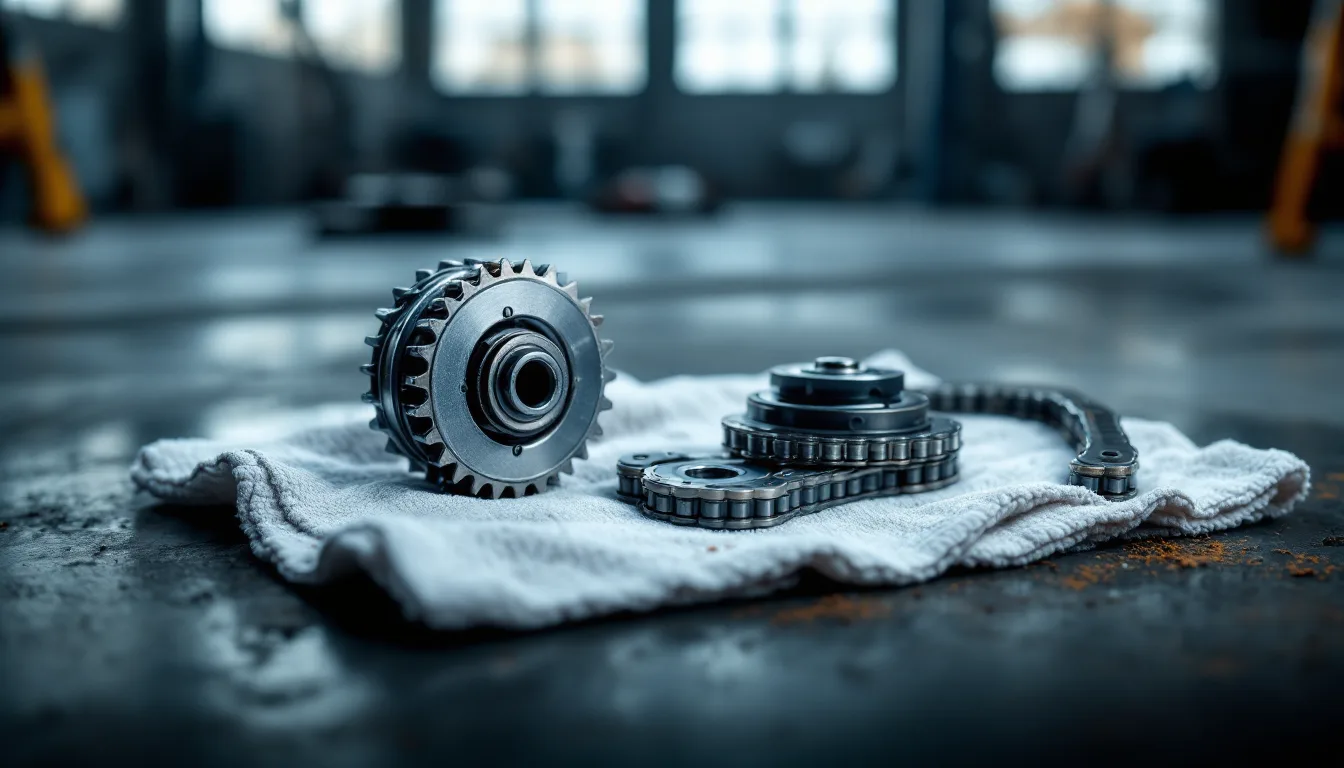
Why do timing chains fail on European engines sold as maintenance-free in Dallas?
A timing belt is a service item with a schedule; a timing chain was sold to a generation of buyers as a lifetime part. The timing belt and chain reference explains the mechanical difference: a chain runs in oil over steel sprockets, held taut by a hydraulic tensioner and guided by plastic rails, and in principle it should outlast the engine. In practice, between about 2004 and 2015, several European manufacturers combined narrow single-row chains, plastic guides that embrittle in heat, tensioners that depend on oil pressure they do not have at a cold start, and oil change intervals of 10,000 to 15,000 miles. The result is a class of engine that announces chain trouble with a rattle in the first seconds of a cold morning and, if ignored, puts pistons into valves.
This article covers the BMW N20 and N26, the MINI N14, the Volkswagen and Audi EA888 in its first two generations, the Mercedes M271 and the M272 balance shaft, the Porsche M96 and M97, and the Jaguar and Land Rover AJ-V8 with its secondary tensioners. It explains what the tensioner does, what the symptoms are, how camshaft deviation is measured with the factory tool before anyone orders parts, and what the repairs cost by engine at an independent shop in east Dallas. Owners from Plano, Addison and Carrollton who have been told the noise is normal should read the symptoms section first.
What does the tensioner do, and how does a chain stretch?
The hydraulic tensioner is a spring-loaded piston fed by engine oil pressure. The spring keeps a minimum preload on the chain when the engine is off; oil pressure adds the working load once the engine runs, and a ratchet or a check valve stops the piston from collapsing between pulses. The chain itself does not stretch like a rubber band. It elongates because each pin and bushing wears a few microns, and across a hundred links those microns add up to several millimeters of extra length. The tensioner takes up that length until it runs out of travel, at which point the chain can slap against the guides and, under a hard deceleration or a cold start with no oil pressure, skip a tooth on a sprocket.
Three things accelerate the wear. Dirty or thin oil lets the pins run metal to metal, which is why extended oil intervals show up in chain failures a few years later. Heat embrittles the plastic guides, so that a guide cracks and the chain runs on its backing plate. And a tensioner design that bleeds down overnight leaves the chain slack at every cold start, which is the specific flaw behind several of the engines below. The oil service page lists the approval oils and intervals that slow this on each brand.
Which European engines fail, and how?
BMW N20 and N26
The N20, produced from 2011 to 2017 with the N26 as its low-emission twin, is the 2.0 turbo four in the 328i, 428i, 528i, X1, X3, X4, Z4 and 228i. Its timing chain guides are plastic and the chain drives the oil pump as well as the camshafts. On early engines the guide rails crack and the tensioner loses its grip, producing a whine at idle and a cold-start rattle that grows into a clatter. If the chain lets go it takes the oil pump drive with it. The repair is the full timing chain set, guides, tensioner, sprockets and the oil pump chain, done from the front of the engine with the camshafts locked. The BMW repair page explains how ISTA is used to measure the deviation before the quote.
MINI N14 and N18
The second-generation Cooper S and John Cooper Works from 2007 use the turbocharged N14 variant of the Prince engine, co-developed by BMW and PSA and introduced in 2006, and the N18 from 2011. The N14 cold-start rattle is well enough known among owners to have its own name. The tensioner is the usual first replacement, but on a high-mileage engine the chain and guides have often worn to the point where the tensioner alone buys a few months; the measurement with ISTA decides which. The MINI repair page covers the engine alongside its other known issues.
Volkswagen and Audi EA888 generations one and two
The EA888, introduced in 2007 and fitted to the GTI, Jetta GLI, CC, Tiguan, A3, A4 B8, A5, Q5 and A6 2.0T, used a tensioner in its first two generations that could lose preload overnight. On a cold start the slack chain could skip teeth, with the familiar result of bent valves. A revised tensioner arrived with the later second-generation update, and the third generation on the MQB cars has not shown the same failure. The symptom before the jump is a cold-start rattle and, later, a P0016 correlation code read with ODIS. The repair on an engine that has not jumped is the tensioner, usually with the chain and guides because the labor is the same. The Audi repair page and the Volkswagen repair page list the variants.
Mercedes-Benz M271
The M271, the 1.8-liter four-cylinder built from 2002 in supercharged Kompressor form and from 2009 as the turbocharged EVO, powers the C-Class, CLK, SLK, E-Class and CLC of those years. Its single-row chain elongates, and the intake camshaft adjuster wears so that the adjuster itself rattles. XENTRY shows the cam offset drifting beyond its window and logs a correlation code. The repair is the chain, the tensioner and usually both camshaft adjusters, since an adjuster that has been hammered by a slack chain does not recover.
Mercedes-Benz M272 balance shaft
The M272 V6, built from 2004 for the C-Class, E-Class, CLK, SLK, ML, R-Class and others, carries a balance shaft in the block driven by the timing chain. On a range of early engines the balance shaft sprocket was made of a material that wears quickly, the worn teeth let the chain and both camshafts on a bank drift, and XENTRY logs P0016 and P0017 together. This is the costliest item in the article because the balance shaft sits inside the block and the engine comes out of the car to replace it. On this site the Mercedes angle is usually module and security work, as the Mercedes repair page explains, but the balance shaft remains the first thing to measure on an M272 with a correlation code.
Porsche M96 and M97
The water-cooled flat six in the 996 and 997.1 911 and the 986 and 987 Boxster and Cayman has a reputation built on the intermediate shaft bearing, covered in the Porsche IMS bearing post. The same engines also wear their chain tensioners and the VarioCam pads that ride on the chains, and PIWIS reports the camshaft deviation for each bank. A deviation outside the accepted window on one bank is the normal reason an M96 is opened up, and the chain and tensioner work is often done alongside the IMS bearing because the engine is already apart. The Porsche repair page covers both.
Jaguar and Land Rover AJ-V8
The AJ-V8, introduced in 1996 in the XK8 and later used in the S-Type, XJ, XF, the Range Rover L322 and the LR3, had plastic-bodied secondary timing chain tensioners on its early 4.0-liter engines that cracked and let the upper chains run loose. Later engines received metal-backed tensioners, and the fix on an early engine is the updated parts. SDD, and Pathfinder on the newer cars, show the cam timing values that reveal a slack secondary chain, and the Jaguar repair page and Land Rover repair page list the related issues on these engines.
What are the symptoms, and which ones mean stop driving?
The first symptom on every engine above is sound. A rattle in the first one to three seconds after a cold start, before oil pressure reaches the tensioner, is the chain running slack. A whine at idle on the N20 is the chain and guides. A clatter that sounds like a diesel on an M271 is the cam adjuster. A rattle that persists after the engine is warm means the tensioner has run out of travel and the chain is loose at all times.
The second symptom is in the fault memory. Camshaft correlation codes, P0016 and P0017 for bank one and P0018 and P0019 for bank two, say that the camshaft position sensor no longer agrees with the crankshaft sensor within the expected window. Camshaft sensor codes such as P0340 and P0341 often appear alongside them, and owners are routinely sold a sensor that does nothing. Misfire codes follow when the valve timing has drifted far enough to affect combustion.
The third symptom is drivability. Rough idle, a loss of power, a check engine light that comes and goes, and on the EA888 and N20 an occasional long crank.
Any one of the following means the car should be transported rather than driven: a rattle that continues when warm, a correlation code together with a misfire, a sudden loss of power with a loud noise, or an engine that cranks faster than normal, which can mean the valves have already been bent and compression is gone. A jumped chain on any of these engines turns a chain repair into a cylinder head repair or an engine replacement.
How is camshaft deviation measured with the factory tool?
Nobody should open a timing cover on the strength of a noise alone. The factory tools make the measurement from the driver's seat, and the shop's diagnostics and coding session on a suspected chain follows the same order on every brand.
The engine controller continuously compares the signal from each camshaft position sensor with the crankshaft sensor and computes an offset in crank degrees. ISTA on a BMW or MINI displays the measured value for the intake and exhaust camshafts against the specified value, and on the N20 it also reports the adaptation the controller has applied to compensate. ODIS and VCDS on an Audi or Volkswagen show the same in the measuring values and carry a guided test for timing chain elongation on the EA888. XENTRY on a Mercedes shows the cam offset values per bank, which on an M272 is the single number that separates a balance shaft from a cam adjuster solenoid. PIWIS on a Porsche shows the deviation per bank and is the standard pre-purchase check on an M96. SDD and Pathfinder show the equivalent on the AJ-V8.
The reading is captured cold and again hot, because a worn tensioner reads worse cold and a stretched chain reads worse hot. A stethoscope on the timing cover and a borescope through the oil filler, where the design allows a view of a guide, add physical evidence. Where the numbers are close to the limit, the camshaft locking tools and the crankshaft pin are fitted with the valve cover off to confirm the mechanical position, which is the same check the technician makes after the repair to prove the new chain is timed correctly.
Only after the measurement is the repair named, and the measurement is recorded on the estimate so the owner can see how far the engine has drifted. On a car being considered for purchase, the same reading is part of the pre-purchase inspection, and it has saved buyers from more than one well-detailed 328i.
What does the repair involve on each engine?
On the N20 and N26 the front of the engine is opened with the engine in the car, the camshafts are locked, and the chain, guides, tensioner, sprockets, oil pump chain and seals are replaced as a set. On the N14 the work is similar from the front, with the tensioner, chain and guides replaced together on a high-mileage engine. On the EA888 the tensioner is reached from the gearbox side of the engine on the transverse cars, which is why the chain and guides are done at the same time rather than coming back later for them. On the M271 the chain, tensioner and both camshaft adjusters are replaced from the front, with XENTRY used afterward to confirm the offset values have returned to specification. On the M272 the engine is removed, the balance shaft is replaced with the updated part, and the chain, tensioner and guides are renewed while it is out. On the M96 and M97 the chain tensioners and VarioCam pads are replaced with the engine out, usually alongside the IMS bearing and rear main seal. On the early AJ-V8 the upper timing covers come off and the plastic secondary tensioners are replaced with the metal-backed type, along with the chains if they have been running loose.
Every one of these jobs finishes with the factory tool: adaptation values reset where the controller stores them, cam deviation measured again and recorded, and a cold-start check the following morning before the car is released.
What does timing chain repair cost in Dallas by engine?
The table lists typical ranges at an independent European shop in Dallas for the engines where the shop quotes a standard range. The rest are quoted after the deviation measurement because the labor depends on the car. These are ranges, not quotes.
| Engine and repair | Dallas independent range | What decides where a car lands |
|---|---|---|
| Diagnostics and coding session with cam deviation measured cold and hot | $165–$265 | Whether a cold-start capture on a second morning is needed |
| EA888 timing chain tensioner, generations one and two | $1,200–$2,200 | Tensioner alone versus tensioner with chain and guides |
| BMW N20 or N26 full timing chain set with oil pump chain | $2,400–$3,800 | Guide condition, whether the oil pump sprocket is included |
| Porsche M96 or M97 IMS bearing with clutch access, chain work added while open | $2,400–$4,200 | Bearing type, whether tensioners and pads are done at the same time |
| Oil service with brand-approval oil, filter and service reset, the cheapest chain protection | $139–$289 | Capacity and the approval the engine calls for |
| Pre-purchase inspection with cam deviation read and full module scan | $195–$295 | Whether a cold-start capture is included |
The MINI N14, the Mercedes M271 and M272 and the Jaguar and Land Rover AJ-V8 are quoted individually after the measurement. The M272 balance shaft is the highest of them because the engine comes out; the AJ-V8 secondary tensioners and the N14 tensioner sit at the lower end when caught before the chain has worn. Dealer quotes for the same work are commonly higher, and the dealer typically quotes the complete chain set where the measurement would have supported the tensioner alone.
Behind every one of these figures is a technician's time. The Bureau of Labor Statistics describes the trade plainly: "Automotive service technicians and mechanics inspect, maintain, and repair cars and light trucks." The same BLS Occupational Outlook Handbook counts 805,600 such jobs in 2024, a median wage of $23.88 per hour and about 33,600 openings projected each year on average over the decade. A technician who can time an N20 from the locking tools, read the deviation in ISTA and know when the number means a balance shaft rather than a solenoid is a specialist within that group, and the hourly rate reflects it.
All timing chain, tensioner, guide and balance shaft work performed at the shop is covered for 2 years parts and 2 years labor, up to 24,000 miles, nationwide, with the before-and-after deviation values written on the invoice.
Is the repair worth it, and what about warranty and recalls?
The question comes up most on a 2013 328i or a 2010 GTI with 110,000 miles, where the chain repair is a meaningful fraction of the car's value. The answer depends on the rest of the engine. A deviation measurement that shows the chain near its limit on an engine with good compression, no oil consumption and a clean service history is a car worth keeping, because the repair resets the single largest risk on it. A chain that has already jumped on an engine with other problems is a different conversation, and the shop will say so after the measurement rather than after the parts are ordered.
Before any estimate the VIN is run through the NHTSA recall lookup. Several of the engines in this article have been the subject of extended coverage programs or class action settlements in the United States, and the terms vary by model year and mileage, so the dealer is asked by VIN whether coverage still applies before an owner pays an independent. Where the car is still inside a factory or extended warranty, the Federal Trade Commission's guidance on auto warranties confirms that having oil changes or other work done at an independent does not void it, and the statute behind that guidance is 15 U.S.C. 2302.
There is a registration angle as well. Dallas, Collin, Denton and Tarrant are among the 17 Texas counties with an OBD emissions inspection for gasoline cars 2 through 24 years old, and the safety inspection ended on January 1, 2025, according to the Texas Department of Public Safety. A correlation code with the light on fails that test, which is one more reason to measure the chain before the renewal month arrives.
The shop is an independent in east Dallas, works in English or Spanish, and sees these engines from across the service area. The European car repair hub indexes the brand pages, and if your engine is making the noise described above, call or text (817) 765-6604 with the year, engine and mileage and we will book the deviation measurement.
Where do these figures come from?
- Timing belt and chain reference: the mechanical background on chains, tensioners and guides.
- BMW N20: production years and applications of the N20 and N26.
- Prince engine: the BMW and PSA joint development behind the MINI N14 and N18.
- Volkswagen EA888 engine: generations, introduction and the tensioner revision.
- Mercedes-Benz M271 and Mercedes-Benz M272: production dates, applications and the balance shaft.
- Jaguar AJ-V8: introduction, displacements and the early tensioner change.
- BLS Occupational Outlook Handbook: the quoted job description, 2024 employment, median wage and projected openings.
- NHTSA recall lookup: the open campaign check by VIN.
- FTC guidance on auto warranties and 15 U.S.C. 2302: independent service and warranty coverage.
- Texas DPS emission inspection criteria: emissions counties, vehicle ages and the end of the safety inspection.
- Timing chain and engine ranges: the shop's Dallas service pages; the estimate for a specific engine follows the deviation measurement.