Transmission
DSG Mechatronic Failure: Diagnosis and Repair Cost Dallas
· 13 min read · Dallas European Auto Repair
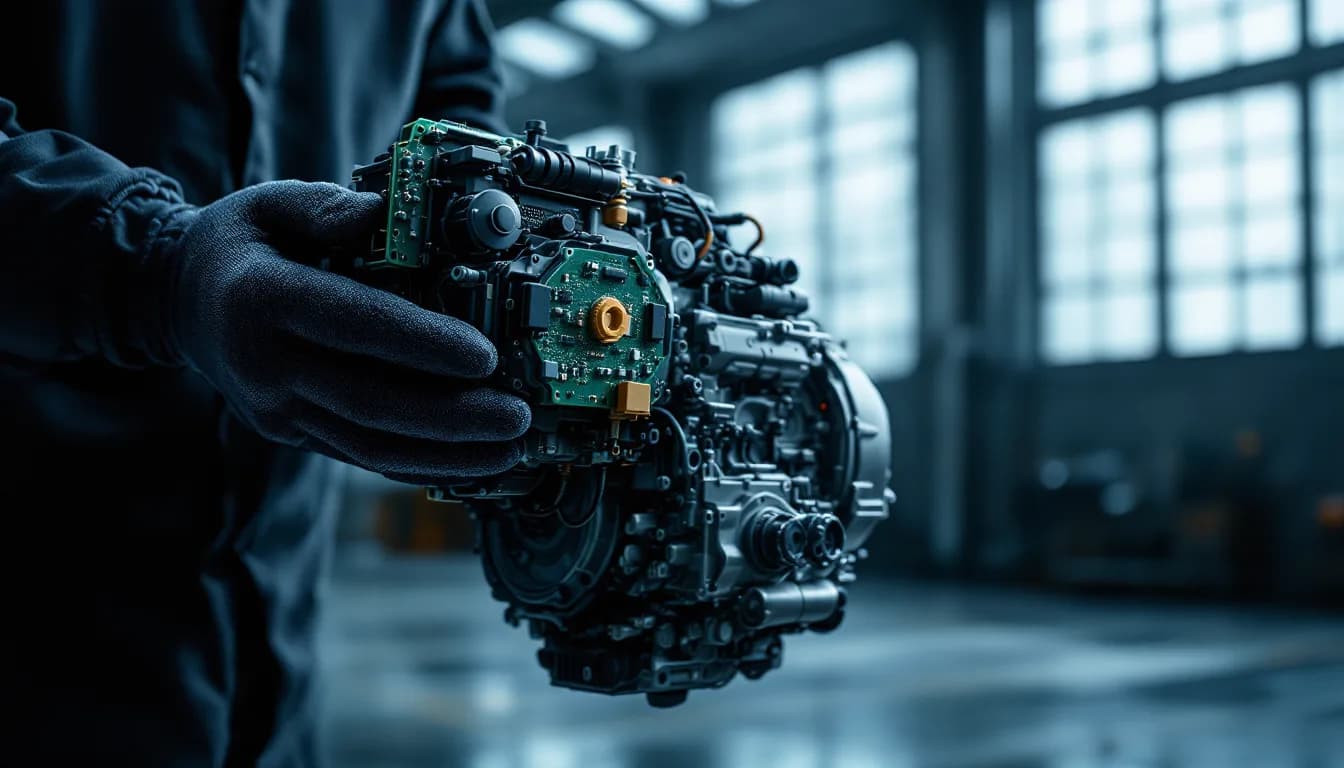
What does a failing DSG mechatronic feel like in Dallas traffic?
The gearbox hesitates when the light turns green, then lurches. The PRNDS letters flash on the cluster. On a hot afternoon on Central Expressway the car refuses to take first and holds second from a stop, or it drops out of gear entirely and the engine revs with nothing connected to the wheels. A message tells the driver the gearbox is in emergency mode. Those are the moments that send Golf, GTI, Jetta, Tiguan, A3, Q3, Q5 and TT owners to search for the words DSG mechatronic, and the search results are a mix of horror stories and sales pitches.
The reality is more orderly. The dual-clutch gearboxes Volkswagen and Audi have fitted since 2003 fail in a small number of known ways, each one leaves a specific trace in the transmission controller's memory, and the factory tool reads that trace before anything is removed. This article explains which gearbox is in which car, what the mechatronic unit does and why it fails, how ODIS separates a fluid problem from a mechatronic problem from a clutch problem, what happens after a replacement, and what the work costs at an independent shop in east Dallas. If your car is already flashing PRNDS, call or text (817) 765-6604 and we will book a diagnostic session before the car gets stranded.
Which DSG and S tronic gearboxes are in Audi and Volkswagen cars?
Volkswagen calls the gearbox DSG and Audi calls it S tronic, but the hardware comes from the same family, documented in the direct-shift gearbox reference. Two clutches drive two input shafts: one carries the odd gears, the other the even gears, and the next gear is already selected before the clutches swap, which is where the fast shift comes from. Knowing which variant you have changes the diagnosis and the price.
DQ250: six-speed wet clutch
The DQ250 was the first, launched in 2003 behind the 3.2 VR6 in the Golf R32 and the Audi TT and then fitted to the GTI, Jetta, Passat, CC, Tiguan, Eos, A3 and TT with the 2.0 TFSI, including the EA888 from 2008. Its two clutches run in oil shared with the gears, and the mechatronic sits inside the housing in that oil. It wants a fluid and filter service every 40,000 miles.
DQ200: seven-speed dry clutch
The DQ200 arrived in 2008 for lower-torque engines, the 1.4 TSI, 1.8 TSI and the 2.0 TDI in some markets, and it is the one owners hear about. Its two clutches are dry, so the gearbox oil never touches them, and its mechatronic has its own sealed hydraulic system: a small reservoir, an electric pump and a pressure accumulator. That design keeps the gearbox light and efficient and concentrates the failures in one component.
DQ381 and DQ500: seven-speed wet clutch
The DQ500 was introduced in 2009 for high-torque transverse applications, the Transporter first and later the RS3, TT RS and Tiguan, and the DQ381 followed in 2017 as the DQ250's replacement on the MQB platform cars: the Golf 7.5 GTI and R, Tiguan, Arteon, Atlas and the A3 and Q3 of the same era. Both are wet-clutch designs with the mechatronic inside the housing, and both follow the 40,000-mile fluid and filter schedule.
DL501 and the longitudinal S tronic
Audi's longitudinal cars, the A4, A5, Q5, A6 and A7 from 2009, use the DL501 seven-speed S tronic, with a separate oil supply for the clutch and mechatronic side and for the gear side, and later the DL382 in front-drive cars. These units share the wet-clutch failure pattern with the DQ250 and the same adaptation needs after repair.
What is the mechatronic unit, and why does it fail?
The mechatronic is the valve body and the transmission control unit built as one assembly. On the hydraulic side it carries the solenoids and spool valves that fill and release each clutch and move the gear selector forks; on the electronic side it carries the controller, the pressure sensors, the temperature sensor and the speed sensors that tell it what the gearbox is doing. On every DSG except the DQ200 it lives in hot transmission fluid and vibrates with the engine for the life of the car, which is a hard environment for electronics.
Failures group into four kinds. Electrical faults in the controller itself, including cracked solder joints at the sensor and solenoid connections, cause intermittent loss of a signal, which the controller reads as a sensor circuit fault and answers by dropping into emergency mode. Hydraulic faults, including sticking solenoids and worn valve bores, cause the wrong clutch pressure, which the driver feels as a shudder, a slip or a hard engagement. Sensor faults, where a pressure or temperature sensor drifts, produce implausible readings and the same emergency mode. And on the DQ200 specifically, the sealed hydraulic unit loses pressure when the accumulator cracks or the pump wears, which the controller logs as a hydraulic pressure fault and answers by shutting the gearbox down to protect it; that is the sudden loss of drive at a light.
Fluid condition feeds all of these on the wet units. Clutch material and metal wear suspended in old fluid wear the valve bores and clog the solenoid screens, so a gearbox that has missed two fluid services is a gearbox whose mechatronic is living in abrasive oil. The maintenance interval is not a dealer upsell on these transmissions.
Heat matters too. Dallas summers push transmission fluid temperatures higher for longer, and a DQ200 stuck in stop-and-go traffic on a 100-degree afternoon runs its dry clutches and its sealed hydraulic unit at the top of their design range for an hour at a time. The controller logs the clutch temperature with each fault, and a pattern of faults that appear in July and August and vanish in January is familiar enough that the shop asks about the owner's commute before the codes are even read.
How is a DSG fault diagnosed with ODIS before anything is replaced?
A generic scanner shows P0700, which only means the transmission controller has something to say, and perhaps one of the standardized gear ratio or solenoid codes. The actual diagnosis happens in ODIS, or in VCDS for the measuring values, and the shop's diagnostics and coding session on a DSG car follows a sequence.
The fault memory of the transmission controller is read with its environmental data: fluid temperature, engine speed, selected gear and mileage at each occurrence, plus the frequency counter. On a DQ200 a hydraulic pressure fault with a protection shutdown points directly at the sealed hydraulic unit. On a wet-clutch gearbox a pressure sensor circuit fault that appears intermittently and always hot points at the controller's internal connections; a clutch slip or clutch temperature fault with no circuit fault points at the clutches or the fluid; a shift solenoid fault that persists cold points at the valve body side.
The measuring values are read next. ODIS and VCDS show the clutch engagement points, the pressures commanded against the pressures measured, the clutch temperatures and, most usefully, the adaptation values and the slip of each clutch. A clutch whose engagement point has walked to the end of its adaptation range is worn; a pressure that is commanded but not reached is a hydraulic fault; a sensor reading that jumps is electrical.
Then the gearbox is driven with the tool logging, because many mechatronic faults only occur at operating temperature after thirty minutes of traffic, and a shop that only reads codes in the bay will miss them. Fluid is inspected on the wet units for color, smell and debris, and on the DQ200 the mechatronic reservoir level is checked. Only when all of that lines up is a part named. The dealer versus independent diagnostics post explains why this sequence needs the factory tool rather than a code reader.
Before the estimate, the VIN goes through the NHTSA recall lookup. The DQ200 has been the subject of campaigns in several markets, and other DSG variants have had software updates issued through campaigns, so a car still inside an open action is sent to the dealer for that work first.
Is it the fluid, the mechatronic or the clutch pack?
These are the three answers the diagnosis produces, and they differ in cost by a factor of ten, so the distinction is worth laying out.
A fluid and filter service is the answer when a wet-clutch DQ250, DQ381, DQ500 or DL501 shudders or shifts harshly, the ODIS data shows clutch slip or temperature rising, the adaptation values are still inside their range, and no circuit fault is stored. Old fluid raises clutch temperature and changes the friction characteristic, and the controller's adaptations cannot keep up. The service replaces the fluid to the correct specification and fill procedure at a set temperature, replaces the filter, and is followed by a clutch adaptation reset and a relearn drive. Done at the 40,000-mile interval it prevents much of what follows. It does nothing for a DQ200 clutch shudder, because the dry clutches never see the gearbox oil.
A mechatronic replacement is the answer when the fault is in the controller or the valve body: a pressure or temperature sensor circuit fault, a solenoid circuit fault, a hydraulic pressure fault on the DQ200, or a pressure that is commanded but not reached on a wet unit with clean fluid. The unit is replaced as an assembly with new seals, the fluid is refilled on the wet units, and the new mechatronic is programmed and adapted as the next section describes. Some DQ200 failures are repaired at the accumulator alone where the controller is sound, which lands in the lower part of the range.
A clutch pack is the answer when the adaptation values have reached their limit, the slip is high with correct pressure, and the fluid is clean. On a DQ200 the dry clutch pack is replaced with its release bearings and the engagement points are learned from scratch; on the wet units the clutch pack comes out through the bell housing after the gearbox is separated from the engine, which is the larger job. A worn clutch in a wet unit can also be the reason the mechatronic failed, through the debris it shed, so the two sometimes go together. Our transmission service page covers the ZF 8HP, Porsche PDK and Mercedes 722.9 alongside the DSG for owners who are not sure which gearbox they have.
What happens after a mechatronic is replaced?
The mechanical installation is the shorter half of the job. A replacement mechatronic, new or remanufactured, is a generic unit until it has been introduced to the car, and that introduction needs ODIS online.
First, software. The transmission controller inside the mechatronic is flashed with the software version ODIS retrieves for the VIN through software version management, using the Unified Diagnostic Services protocol the group's controllers speak. The flash runs with a regulated power supply on the battery, and it can be followed by a coding step that tells the controller which engine, final drive and market it is serving. A controller flashed with the wrong version shifts at the wrong points and throws plausibility faults against the engine controller.
Second, basic settings. The new unit does not know where the clutches bite, where the selector forks sit or how the pressure sensors read, so a series of guided procedures in ODIS teaches it: clutch adaptation at a specified fluid temperature, synchronizer and gear position learning, and pressure sensor zeroing. Each takes minutes and each has preconditions, including fluid temperature windows that have to be met with the engine running.
Third, the relearn drive. The controller refines its clutch adaptations over the first miles with repeated gentle launches and shifts, and the shop performs that drive before the car is returned rather than leaving it to the owner to discover a lumpy week.
A shop that bolts in a mechatronic without the online flash and the basic settings is the source of the forum stories about replacements that failed within a month. The module programming post explains the same programming, coding and adaptation sequence for the engine, body and access controllers.
What does DSG mechatronic repair cost in Dallas?
The table lists typical ranges at an independent European shop in Dallas for the work a DSG diagnosis leads to. They are ranges rather than quotes, and the third column explains the spread.
| DSG and S tronic work | Independent range in Dallas | Why a given car lands high or low |
|---|---|---|
| Diagnostics and coding session with a logged test drive and written findings | $165–$265 | Whether the fault only appears after thirty minutes of traffic |
| DSG or S tronic fluid and filter service with clutch adaptation reset | $320–$520 | Gearbox variant, fluid specification, whether the DL501 needs both oil circuits |
| Mechatronic replaced, programmed and adapted | $1,900–$3,400 | DQ200 accumulator-only repair at the bottom, wet-unit mechatronic with fluid at the top |
| ZF 8HP fluid, filter and pan, for the longitudinal Audi cars that use it | $420–$680 | Pan type and whether the mechatronic sleeve is replaced |
| Pre-purchase inspection with a full module scan and written report | $195–$295 | Whether a DSG adaptation read and test drive are included |
A DQ200 whose controller is intact and only needs the hydraulic unit sits at the bottom of the mechatronic range. A DQ381 or DL501 that needs the full assembly, fresh fluid and the complete adaptation sequence sits at the top. A clutch pack on a wet unit is quoted separately after the diagnosis because the labor depends on the car, and it falls inside the transmission range listed on the service page. Dealer quotes for the same mechatronic replacement are commonly higher, and the dealer rarely offers the accumulator-only option on the DQ200.
The labor pool for this work is specific. The Bureau of Labor Statistics counts 805,600 automotive service technician and mechanic jobs in 2024, with median pay of $23.88 per hour and about 33,600 openings projected each year on average over the decade, per the BLS Occupational Outlook Handbook. Technicians who can read DSG adaptation values in ODIS and run the basic settings correctly are a narrow slice of that figure, which is reflected in the hourly rate.
Everything in the table performed at the shop is covered for 2 years parts and 2 years labor, up to 24,000 miles, nationwide, and the invoice records the software version flashed, the adaptation values after the relearn drive and the fluid specification used.
Does a factory warranty or service contract cover DSG repair at an independent?
Many of the DQ381 and DL501 cars in Dallas are still inside the manufacturer's powertrain warranty or an extended service contract, and owners worry that bringing them to an independent gives the manufacturer an excuse. Federal law says otherwise. The Magnuson-Moss Warranty Act states at 15 U.S.C. 2302(c) that "No warrantor of a consumer product may condition his written or implied warranty of such product on the consumer's using, in connection with such product, any article or service (other than article or service provided without charge under the terms of the warranty) which is identified by brand, trade, or corporate name", and the Federal Trade Commission's consumer guidance adds that a manufacturer must show the outside work caused a failure before denying a claim.
In practice this means two things. If the ODIS diagnosis finds a mechatronic fault on a car still inside its powertrain warranty, the shop says so, prints the findings, and the owner takes them to the dealer for a covered repair. If the car is out of warranty, or the warranty excludes the component, the repair is done here with the fluid specification, software version and adaptation values written on the invoice so the record stands. The Federal Trade Commission's 2021 Nixing the Fix report to Congress examined how repair restrictions push owners toward manufacturer networks, and access to ODIS and the online software service for independents is part of the answer to it.
The shop sits in east Dallas, works in English or Spanish, and sees DSG cars from Garland, Mesquite and Irving across the service area. The Audi repair page and the Volkswagen repair page list the other systems covered on these cars, and the European car repair hub is the index for the rest.
Where do these figures come from?
- Direct-shift gearbox: the DQ250, DQ200, DQ500 and DQ381 variants, introduction dates and applications.
- EA888 engine and MQB platform references: the engines and platforms each gearbox is paired with.
- Unified Diagnostic Services: the protocol used to flash the transmission controller.
- 15 U.S.C. 2302: the quoted Magnuson-Moss provision on warranty conditions.
- FTC consumer guidance on auto warranties: the burden on a manufacturer denying a claim.
- FTC, Nixing the Fix (2021): the report on repair restrictions.
- NHTSA recall lookup: the open campaign check before any DSG estimate.
- BLS, automotive service technicians and mechanics: 2024 employment, median hourly pay and projected openings.
- DSG and transmission ranges: the shop's Dallas service pages; the estimate for a specific gearbox follows the ODIS session and test drive.