Engine
Porsche IMS Bearing Dallas: Which Cars, Inspection, Cost
· 16 min read · Dallas European Auto Repair
Which Porsche models carry the IMS bearing risk?
The intermediate shaft bearing question comes up on nearly every pre-purchase call we take for a water-cooled 911 or Boxster, and the honest answer is that it applies to a specific set of engines rather than to every Porsche of the period. The M96 engine debuted in the 986 Boxster, which the 986 Boxster reference records as built from 1996 to 2004, and the same family powered the 996-generation 911 that followed. The 996 reference dates that car from 1997 through 2004 as the first water-cooled 911. The M97 evolution carried on in the 987 Boxster and Cayman and in the 997.1 Carrera, and the 997 reference places that generation from 2004 to 2012, with the 2009 mid-cycle 997.2 update switching to the direct-injection 9A1 engine that has no intermediate shaft at all.
So the affected list is: every 986 Boxster, every 996 Carrera, Carrera 4, Carrera 4S and Targa, the 987.1 Boxster and Cayman built for 2005 to 2008, and the 997.1 Carrera and Carrera S built for 2005 to 2008. The cars that do not have the problem are just as important to name. The 996 Turbo, GT2 and GT3 use the Mezger engine descended from the GT1 racing program, which drives its camshafts through a different arrangement and has no comparable bearing worry. Any 997.2, 987.2, 991 or 981 with the 9A1 engine sits outside the discussion entirely. If a seller in Dallas tells you the IMS "was done" on a 2010 Cayman, that is a reason to look harder at everything else in the listing.
We run a PIWIS session and a hands-on inspection as part of every pre-purchase inspection on these cars, and the rest of this article covers what that inspection looks for, what the three bearing variants mean, and what a replacement costs at an east Dallas independent shop. If you already own one of these cars and want the bearing addressed, call or text (817) 765-6604 with the model year and whether the car is a manual or a Tiptronic, because that detail changes the job.
What does the intermediate shaft do, and why does its bearing fail?
The intermediate shaft sits low in the crankcase, below and parallel to the crankshaft. The crank drives it by chain, and the shaft in turn drives the camshaft chains for both cylinder banks. The layout lets the cam chains run shorter and lets the engine sit lower in the chassis. At the flywheel end, the shaft is carried by a sealed ball bearing pressed into the case and retained by a flange and a center stud. That is the IMS bearing.
The design decision that causes the trouble is a sealed, grease-packed bearing living in an environment full of hot engine oil. The factory seal keeps oil out, which sounds sensible until the grease inside breaks down over years of heat cycles. Once the grease is gone, the seal eventually admits a little oil, but never enough to lubricate a ball bearing under cam-drive load. The balls and races begin to pit, the bearing sheds steel particles into the oil, and in the final stage it collapses, the shaft shifts, cam timing jumps and the pistons meet the valves. At that point the engine is not repaired; it is replaced or rebuilt, which is why so much effort goes into catching the bearing early.
Several factors move the risk on an individual car. Infrequent oil changes leave acidic oil in contact with the seal for longer. Short trips that never bring the oil to full temperature are harder on it than long highway runs. Cars that sat for years with the same oil are a particular concern, which matters in Texas where a garaged weekend car can go a long time between services. None of these causes the failure by itself, but together they explain why two identical 2001 Boxsters can have very different bearings inside.
Dual-row, single-row or the 2006 to 2008 bearing: which one is in your car?
Porsche used three bearing designs across the production run, and the distinction decides both the risk level and whether the bearing can be replaced without splitting the engine.
The dual-row bearing, 1997 to 1999 and some 2000 cars
The earliest M96 engines used a dual-row ball bearing. It has the largest load capacity of the three and is generally regarded as the most durable of the original designs. It is also the easiest to replace, because it comes out through the flange once the transmission and flywheel are off. Early 986 Boxsters and the 1999 and 2000 model-year 996 carry it, and some engines built into 2000 and 2001 still received it, so the model year alone does not settle the question.
The small single-row bearing, roughly 2000 to 2005
From about the 2000 model year, Porsche moved to a smaller single-row bearing. It carries the same loads on far less ball-contact area, and it is the design most associated with the failures discussed on owner forums. It can be replaced through the flange with the transmission removed, in the same way as the dual-row unit, which is why the retrofit market concentrates on this version. A 2002 996 Carrera, a 2003 Boxster S and a 2005 997.1 Carrera all sit in this group.
The larger non-serviceable bearing, 2006 to 2008
For the 2006 model year the bearing grew to a much larger single-row unit with a bigger outer race. Its failure rate is widely reported to be far lower than that of the small single-row bearing, which is good news for owners of 2006 to 2008 987 and 997.1 cars. The trade-off is that it is too large to pass through the opening in the case; replacing it requires the engine to come out and the case halves to be split. In practice it is not replaced preventively, and the program for these cars is monitoring rather than retrofit.
If you do not know which bearing your car has, the flange and center stud identify it once the transmission is out, and the engine number gives a strong indication beforehand. Our PIWIS session records the engine number, and the inspection report tells you which category you are in before any money is spent on a retrofit that might not apply.
What are the warning signs of a failing IMS bearing?
The frustrating truth is that most IMS failures give little warning, which is exactly why inspection matters more than symptoms. Even so, a few signs point at a bearing that has started to break down.
A rattle or rhythmic grinding from the rear of the engine at idle, specifically a new noise from the flywheel end rather than the cold cam-chain tensioner noise these engines make anyway, deserves immediate attention. An oil leak at the rear of the engine where the flange meets the case is a classic sign that the bearing seal or the flange seal has failed, and it is often misdiagnosed as a rear main seal leak. Both seals live within inches of each other and both are renewed during the retrofit, but a leak from the flange is the more urgent of the two.
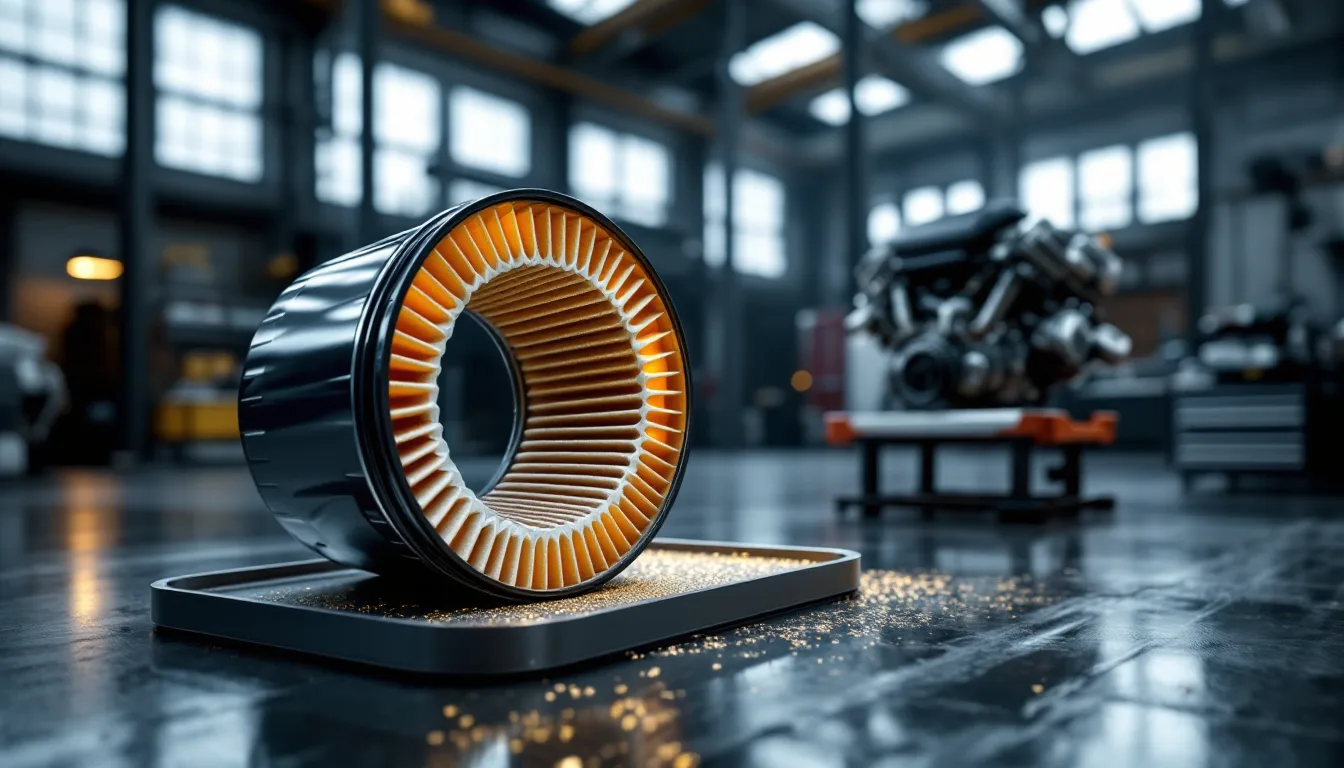
Metal in the oil is the clearest warning. Steel from the balls and races shows up as fine glitter in the filter media, and because it is ferrous it sticks to a magnet. Plastic debris from the cam-chain tensioner pads looks different and is a separate wear item. If a seller shrugs off a noise or refuses to allow the filter to be cut during an inspection, treat that as the answer to your question.
How do we inspect a Porsche for IMS risk before you buy or before it fails?
The inspection has four parts, and the order matters because the cheap checks come first.
The first is the oil filter cut. We drain the oil, remove the filter cartridge and cut the pleated element open on a clean bench. Ferrous debris, confirmed with a magnet, points at the bearing or at the cam-chain hardware. Non-ferrous bright flakes point elsewhere, such as the rod bearings. A clean filter is reassuring but not conclusive, because a bearing can go from a few flakes to collapse within a short mileage once it starts. An oil sample sent to a laboratory adds a second data point on iron, chromium and silicon for a small additional charge.
The second is the physical inspection with the car on the lift: the flange area for seepage, the rear main seal, the air-oil separator and its vacuum signature, the coolant expansion tank for the cracks these cars develop, and the cam-chain tensioner housings for leaks. We also check the engine number against the bearing generation and photograph everything.
The third is the PIWIS scan. It polls every module on the car, reads the fault memory with occurrence counters, and the engine over-rev ranges, which get their own section below. On a 997.1 it also reads the camshaft deviation values for each bank. A deviation that drifts outside Porsche's tolerance can indicate chain wear, tensioner wear or an intermediate shaft that has started to move, and it is a finding a generic OBD reader cannot produce.
The fourth is a borescope look into each cylinder through the spark plug hole, which is about bore scoring rather than the IMS, and the next section explains why it belongs in the same visit.
Every step is written up in the report with photographs, the PIWIS printout and a ranked list of what needs attention now and what can wait. The Porsche repair page describes the other systems we check on these cars, including the plastic coolant pipes on the Cayenne and the PDK service on later models.
Is bore scoring the bigger risk on later M97 engines?
Bore scoring is a separate failure with a different cause, and on the 2005 to 2008 cars it has arguably overtaken the IMS as the first thing to check. The M96 and M97 engines use Lokasil cylinder liners, an aluminum-silicon composite cast into the block. Under certain conditions the piston skirt wears through the hard silicon surface and scores the bore, most often on cylinders 4, 5 and 6, the bank that sits lower in the car. The 3.8-liter M97 in the 997.1 Carrera S is the engine most discussed, though 3.6-liter cars and the 987 Cayman S are not immune.
The symptoms are a ticking from the lower bank at cold idle that sounds almost like a diesel, rising oil consumption, and eventually smoke on startup. A sooty black deposit on the tailpipe of the affected bank is a common tell. Once the bores are scored, the repair is engine-out work with sleeving or a replacement block, and the cost lands in the same territory as a full engine replacement.
That is why a borescope is part of our pre-purchase inspection on these cars. A quick look through each plug hole shows vertical scoring at the thrust side of the bore long before oil consumption becomes obvious. Buyers who pay for an IMS retrofit on a 2007 997.1 without checking the bores have addressed the smaller risk and ignored the larger one. We check both, because only one of them has to be present for the purchase to turn expensive.
What does a PIWIS over-rev report tell you about the previous owner?
Porsche engine control units record every time the engine exceeded its rev limit and sort the events into ranges. On the M96 and M97 cars, the DME logs ranges 1 through 6, where range 1 is a brief visit just above the redline, such as a hard upshift, and ranges 5 and 6 represent speeds that can only come from a missed downshift into too low a gear on a manual car. For each range, the report records the number of ignitions and the engine hours at which the most recent event occurred.
The over-rev report is the single most useful piece of history on a used Porsche because the seller cannot edit it. A car with a few hundred ignitions in range 1 and nothing above it was driven with enthusiasm and nothing more. A car with events in range 4 or higher within the last few hundred engine hours was mis-shifted hard enough to risk valve-to-piston contact and bent valves, and the seller often does not know. A high-range event thousands of engine hours ago on a car that has since had a compression and leak-down test is a different conversation from a fresh one.
We include the printout in the inspection report, explain each range and relate the hours to the current engine-hour counter so you know how recent any event was. It adds nothing to the PIWIS session cost and it regularly changes the price a buyer is prepared to pay.
What does IMS bearing replacement involve on a manual versus a Tiptronic?
Replacing the bearing on a dual-row or small single-row engine means reaching the flange at the back of the engine. On a manual car that means removing the transmission, the clutch and pressure plate, the flywheel and the rear main seal, then pulling the old bearing with a dedicated extractor and pressing in the replacement. The cam timing must be locked before the shaft is disturbed, which needs the factory locking tools and the correct procedure; skipping that step is how a retrofit turns into a timing job.
Because the clutch is already out, this is the moment to replace it. A clutch kit, a dual-mass flywheel inspection and a new rear main seal add parts cost but almost no extra labor, and nobody wants to pay for a second transmission removal a year later because a marginal clutch was left in place. The same logic applies to the air-oil separator and the engine mount, both easier to reach with the gearbox out.
On a Tiptronic car, the transmission still comes out, but there is no clutch to renew; the torque converter is removed to reach the flange. The labor is similar, the parts list is shorter, and the converter seal is the extra inspection item.
Replacement bearing options include ceramic hybrid bearings that run without a seal so engine oil lubricates them, roller-type solutions, and Porsche's own updated bearing. We go through the options and their maintenance expectations, because some retrofit bearings are sold as a service item with their own replacement interval rather than a permanent fix. On a 2006 to 2008 car with the large bearing there is no through-the-flange retrofit, and we recommend the filter-cut monitoring program at each oil service instead of surgery.
What should you check at every oil service once the retrofit is done?
A retrofit does not end the monitoring; it changes what you are monitoring for. At each oil service on an M96 or M97 car we cut the filter regardless of bearing history, because ferrous debris can also come from the cam-chain sprockets, the tensioner guides or, on a scored engine, the piston skirts. We log the result on the invoice so the record builds over time.
Oil choice matters more on these engines than on most. The factory approval list specifies the viscosity and additive package, and the right oil keeps the silicon bore surface and the chain hardware happier in the Dallas heat, where a car parked outside in August sees oil temperatures that a northern climate rarely produces. A service interval of a year or a modest mileage, whichever comes first, is a reasonable program for a car that is driven lightly, and our oil service on these cars includes the filter cut and the service reset in PIWIS.
Cooling system condition belongs in the same visit. A cracked expansion tank, a tired water pump with a wobbling impeller, or a radiator packed with road debris raises operating temperatures, and heat is the enemy of every seal in this engine, the IMS bearing seal included. The cooling system page lists the ranges for those items.
What does IMS bearing work cost in Dallas?
The ranges below are typical for an independent Porsche specialist in Dallas. The written estimate for your car follows the inspection and shows what moves each line.
| Item | Typical Dallas range | What moves it |
|---|---|---|
| Pre-purchase inspection with PIWIS scan, filter cut and written report | $195–$295 | Whether a borescope check and a laboratory oil analysis are added |
| PIWIS diagnostic session on a car you already own | $165–$265 | Over-rev report, camshaft deviation readings, guided tests |
| IMS bearing replacement with clutch access, bearing and rear main seal | $2,400–$4,200 | Bearing design chosen, manual or Tiptronic, clutch kit added while apart |
| Oil service with Porsche-approved oil, filter, filter cut and service reset | $139–$289 | Oil specification, laboratory sample, fluid capacity |
Dealer quotes for comparable bearing work are commonly higher, and many dealers do not offer the aftermarket bearing designs at all. The variable that matters most is what else is done while the transmission is out: a clutch, flywheel and rear main seal together with the bearing is the most common package and sits toward the upper end of the range, while a bearing and seal alone on a Tiptronic car sits toward the lower end.
The Bureau of Labor Statistics puts the labor behind this work in perspective. Its Occupational Outlook Handbook counts 805,600 people working as automotive service technicians and mechanics in 2024, at a median wage of $23.88 per hour, with about 33,600 openings projected each year on average over the decade, according to the BLS handbook. The handbook's definition of the trade is plain: "Automotive service technicians and mechanics inspect, maintain, and repair cars and light trucks." Technicians who own the Porsche cam-locking tools and a PIWIS subscription are a small subset of that total, and the labor rate on a retrofit reflects it.
Every retrofit we perform is covered by the 2-year/24,000-mile repair warranty, which in full is 2 years parts and 2 years labor, up to 24,000 miles, nationwide. The invoice records the bearing part number, the filter-cut findings and the PIWIS data so the next owner of your car can see exactly what was done and when.
Is the IMS bearing a reason to walk away from a 996 or a Boxster?
No, provided the car is inspected and priced with the bearing in mind. A 996 Carrera or a 986 Boxster with a documented retrofit, a clean filter and a sensible over-rev report is one of the most affordable ways into a flat-six Porsche, and the bearing becomes a line item in the negotiation rather than a mystery. A car with no history, a weeping flange and a seller who will not permit a filter cut is a different proposition, and the inspection report gives you the leverage either to walk away or to price the retrofit into your offer.
Two administrative checks belong in the same visit. Check the VIN in the NHTSA recall lookup before purchase, because open recalls are repaired without charge and a car with several outstanding ones tells you how it was cared for. Remember too that in Dallas County a gasoline car from 2 through 24 years old still takes the OBD emissions test under the Texas DPS inspection criteria, which list 17 emissions counties including Dallas, Collin, Denton and Tarrant; a 2003 996 with a lit check engine light will not pass until the fault is fixed, even though the state safety inspection ended on January 1, 2025.
Newer Porsches still under a factory or extended warranty can also be inspected and serviced independently. The FTC's consumer guidance on auto warranties confirms that a manufacturer cannot void coverage merely because an independent shop did the work, and that a claim can be denied only for damage the improper work actually caused, as set out by the FTC. We keep inspection and service records in the format a warranty conversation would need.
If the car you are considering is anywhere in the Dallas area, or already in your garage in Garland, Mesquite or Richardson, book the inspection before the sale closes or before the next oil service. Our European car repair hub explains how the shop is equipped for the other brands we see, and Spanish-speaking owners can arrange everything in Spanish.
Where do these figures come from?
- Porsche 986 Boxster, Porsche 996 and Porsche 997 references: production years, engine families and the 997.2 switch to the 9A1 engine.
- BLS Occupational Outlook Handbook, Automotive Service Technicians and Mechanics: the 2024 employment count, median hourly wage, projected openings and the quoted definition.
- Texas Department of Public Safety, emission inspection criteria: the 17 emissions counties, the 2 through 24 year age bracket and the end of the safety inspection.
- NHTSA recall lookup: outstanding recalls by VIN ahead of a purchase.
- FTC, Auto Warranties and Auto Service Contracts: independent service and factory warranty coverage.
- Bearing generations, inspection method and repair ranges: typical independent-shop figures in Dallas drawn from the shop's Porsche and pre-purchase inspection pages; the written estimate for a specific car follows the PIWIS session and filter inspection.