Engine
Audi and VW Carbon Buildup: Symptoms and Cost in Dallas
· 13 min read · Dallas European Auto Repair
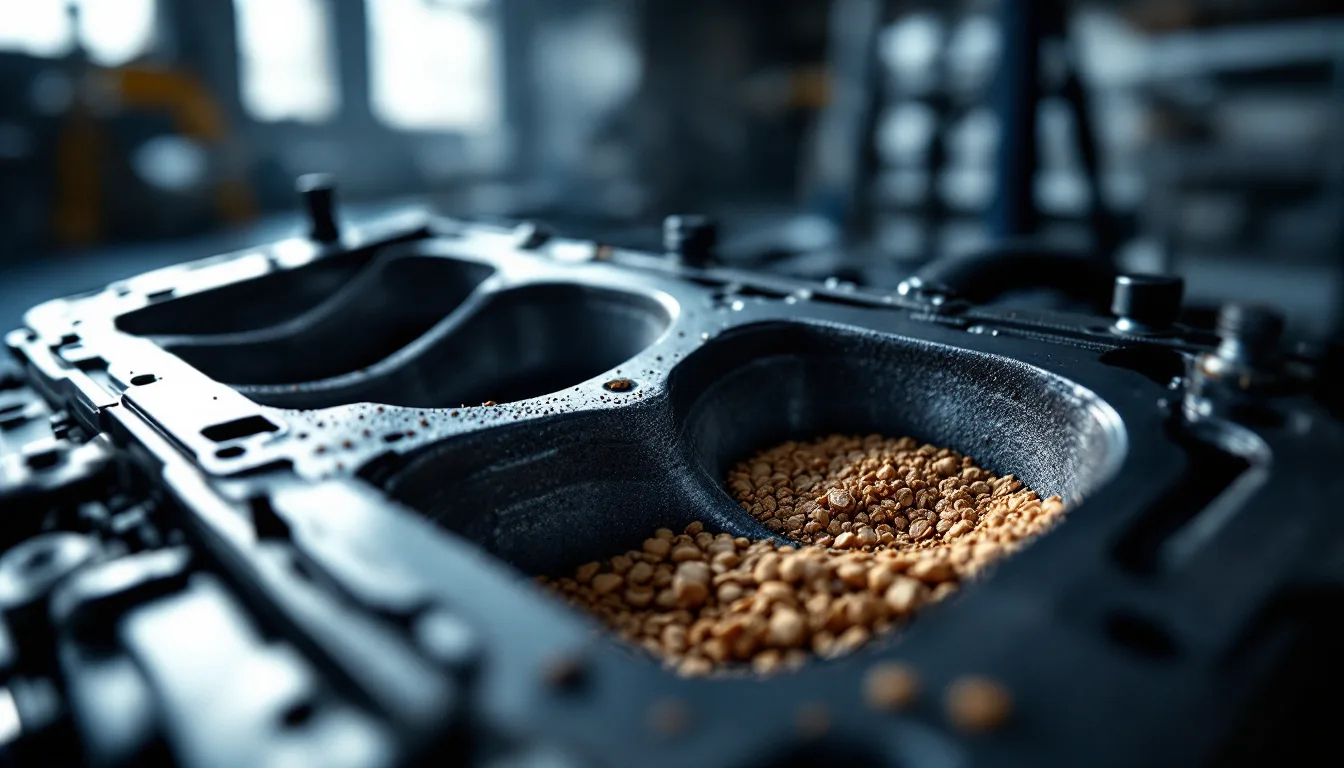
Why do Audi and Volkswagen direct-injection engines build up carbon in Dallas?
Direct injection solved one problem and created another. By spraying fuel straight into the combustion chamber instead of onto the back of the intake valve, Audi and Volkswagen gained precise fuel control, higher compression and better economy across the FSI, TFSI and TSI families. They also removed the one thing that used to keep intake valves clean: a constant wash of gasoline. The gasoline direct injection reference traces the technology back to a 1952 Gutbrod application and notes intake valve deposits as a recognized drawback of the layout. On a Dallas commute, with short trips in traffic and long idling in summer heat, the deposits form faster than most owners expect.
This guide covers which Audi and Volkswagen engines coke their valves worst, what the symptoms look like, how the fault is confirmed with ODIS or VCDS before anyone pulls an intake manifold, why walnut blasting is the method that works, how often it is needed, and what it costs at an independent shop in Dallas. The owners of an A4, Q5, GTI, Tiguan or S4 who arrive here from Richardson or Plano with a cold-start shake have usually already replaced coils and plugs on advice from a forum; the point of this article is to avoid that detour.
Which Audi and Volkswagen engines are affected most?
Not every direct-injection engine from the group behaves the same way. The deposit rate depends on the crankcase ventilation design, camshaft timing, where the injectors sit and whether a port injector was ever added.
The EA113 2.0 FSI and 2.0 TFSI
The EA113 family powered the 2005 to 2008 Jetta and GTI, the Audi A3 and the B7 A4 as a naturally aspirated FSI and then as the 200-horsepower turbocharged TFSI. These engines built deposits early and visibly, often by 50,000 miles, and they also suffered the high-pressure fuel pump cam follower wear that produces a separate cold-start misfire. Any diagnosis on an EA113 checks the follower before blaming carbon.
The EA888 first and second generation
The EA888, introduced in 2007 and used in the CC, Tiguan, GTI, Jetta GLI, A3, A4 B8, A5, Q5 and A6 2.0T, is the engine Dallas owners most often ask about. The first two generations have no port injection, a crankcase ventilation valve that fails and dumps oil vapor into the intake, and a timing chain tensioner with its own history, which the timing chain tensioner post covers. Some third-generation EA888 variants built on the MQB platform, which arrived in 2012, added a port injector that sprays onto the valve at low load and markedly slows the buildup. A 2010 A4 and a 2018 A4 can therefore look very different inside at the same mileage.
The supercharged 3.0 TFSI V6
The 3.0 TFSI in the S4, S5, A6, A7, Q5, Q7 and SQ5 from 2009 onward is a direct-injection V6 with a supercharger sitting on top of the valley. It cokes its valves the same way as the four-cylinder, and the complication is access: the supercharger and its intercoolers come off before the intake ports can be reached, which is why the cleaning sits at the top of the price range.
The 3.2 FSI and 4.2 FSI
The 3.2 FSI V6 in the B7 A4, A6 and Q7 and the 4.2 FSI V8 in the S5, RS4 and Q7 are older designs that deposit heavily, and on the V8 the intake manifold removal is a half-day on its own. They are less common in the shop now but still arrive from the Highland Park and University Park side of town.
What symptoms does intake valve carbon cause?
The symptom pattern is distinctive once you know it. The engine is started cold, idles rough and shakes the car for a minute or two, then smooths out as it warms. The misfire monitor logs P0300 or a single-cylinder code such as P0301 through P0304 during that window and sets the check engine light after two cold starts in a row. By the time the owner gets to work the engine feels normal, which makes the fault easy to dismiss.
Underneath that pattern are three mechanisms. First, the deposits narrow the port and disturb the air tumbling into the cylinder, so the mixture near the plug is uneven at low speed and low temperature. Second, carbon on the valve seat and face prevents a perfect seal at cold idle, and a cylinder with a slight leak misfires exactly when combustion is already marginal. Third, deposits absorb fuel vapor and release it unpredictably, so the fuel trims at idle drift lean and the engine controller chases them.
Beyond the cold idle, owners report a flat spot under light throttle, a hesitation when pulling away from a stop, fuel economy that has fallen by a couple of miles per gallon over a year, and a gradual loss of top-end power on the turbocharged engines. On the 3.0 TFSI a heavy deposit layer can make the engine feel like it has lost fifty horsepower. None of these symptoms is unique to carbon, and that is why the diagnosis matters more than the cleaning.
How is carbon buildup confirmed with ODIS or VCDS before cleaning?
Pulling an intake manifold on suspicion is a four-hour gamble. The factory tools let the technician build the case first, and the shop's diagnostics and coding session on an Audi or Volkswagen follows a fixed order.
The first step is the fault memory in the engine controller, read with ODIS or VCDS rather than a generic scanner, because the factory tools show the environmental data stored with each misfire: coolant temperature, engine speed, load and the number of occurrences. A misfire that only ever logs under 40 degrees Celsius coolant and under 1,000 rpm is the carbon signature; a misfire that logs hot and under load points elsewhere.
The second step is the per-cylinder misfire counters in the measuring values, watched live during a cold start. ODIS displays each cylinder's count rising in real time, and carbon typically shows two or three cylinders misfiring together in the first minute, not one cylinder in isolation. A single cylinder with a high count and the rest clean is more likely a coil, an injector or a compression problem.
The third step is the fuel trims and the oxygen sensor behavior at idle, which drift lean on a heavily coked engine, and the intake air mass against the expected value for the engine speed, which reads low when the ports are narrowed.
The fourth step is physical. A borescope through the spark plug hole shows the piston crown and valve faces, and on the EA888 the technician can also remove the intake manifold flap motor and look up the port. On a car with a clear ODIS history and visible deposits, the cleaning is quoted. On a car where the misfire data does not match, the diagnosis continues, because the next section lists the things that mimic carbon.
The On-board diagnostics standard that has applied to new cars in the United States since the 1996 model year is what lets a generic reader see P0300, but the environmental data, the live counters and the component tests are manufacturer-level functions, and they are the difference between a confirmed diagnosis and a guess.
What else causes cold-start misfires on these engines?
Several faults share the carbon symptom, and an owner who pays for walnut blasting when one of these is the real cause gets a clean engine that still shakes.
The crankcase ventilation valve on the EA888 first and second generation has a diaphragm that tears. When it does, the engine pulls unmetered air into the intake, idles rough, whistles at the oil cap and often sets lean codes alongside the misfires. The valve is inexpensive and it is also the component that accelerates carbon formation, so it is checked and replaced before or during any cleaning.
Ignition coils and spark plugs fail on these engines in the ordinary way, and a single-cylinder misfire that moves when the coil is swapped to another cylinder is a coil. Plugs past their interval misfire first when cold.
Injectors on the early FSI and TFSI engines can dribble or stick, which produces a rich cylinder at start and a misfire that clears when the injector warms. ODIS shows the injector balance in the measuring values on later engines, and a leak-down of the fuel rail pressure after shutdown points at a leaking injector.
The high-pressure fuel pump cam follower on the EA113 wears through, the pump loses stroke, rail pressure falls at start and the engine misfires or cranks long. This is checked with a visual inspection of the follower, which takes twenty minutes and is cheaper than any guess.
Timing chain stretch on the EA888 and the cam adjuster on the intake side produce correlation codes, P0016 and P0341, and a cold-start rattle that a carbon cleaning does nothing for. The Audi repair page and the Volkswagen repair page describe how the shop separates these from one another, and if your car has already been through a cleaning elsewhere without improvement, call or text (817) 765-6604 with the fault codes and we will start from the ODIS data rather than from the manifold.
What does walnut blasting involve, and why not a chemical cleaner?
The cleaning method the manufacturers themselves describe for these engines is mechanical. The intake manifold is removed, which on the EA888 means the fuel rail, the flap motor and the manifold itself, and on the 3.0 TFSI means the supercharger assembly. The crankshaft is rotated so that both intake valves of the cylinder being cleaned are fully closed, which keeps media out of the combustion chamber. A fixture seals over the port, and crushed walnut shell is blasted through a nozzle at the valve stems and heads while a vacuum extractor pulls the shell and the carbon out of the port. The process is repeated for each cylinder, the ports are inspected with a borescope, the manifold goes back on with new gaskets, and the engine controller's adaptation values are reset with ODIS so the fuel trims relearn from the clean baseline.
Walnut shell is used because it is hard enough to shear baked carbon off steel and soft enough not to damage the valve seat or the aluminum head, and because any stray grain that reaches the cylinder burns harmlessly. On a four-cylinder the job takes three to five hours; the V6 with the supercharger takes longer.
Chemical cleaners sprayed through the intake soften the top layer and leave the base layer, which is the layer that causes the cold-start misfire. The loosened fragments travel into the turbocharger and the catalytic converter, where they do not belong. Fuel additives do nothing at all, because on a direct-injection engine the fuel never touches the intake valve. Dealers in the area sometimes quote an induction service as a lower-cost alternative; it does not address the fault.
How often should intake valves be cleaned, and can buildup be slowed?
The honest interval is a range because the deposit rate is driven by how the car is used. On the EA113, the first two EA888 generations and the 3.0 TFSI, deposits become measurable somewhere between 40,000 and 80,000 miles, and a repeat cleaning every 50,000 to 70,000 miles keeps the engine where it should be. A car that runs short trips with the oil never fully hot sits at the early end; a car that does highway miles from Frisco to downtown every day sits at the late end.
Four habits slow the buildup. The first is oil. These engines call for a VW 502 00 or 508 00 approval oil depending on the generation, with low volatility, and running a generic oil at extended intervals increases the vapor the ventilation system sends to the intake. The oil service page lists the approvals the shop uses. The second is the crankcase ventilation valve, which is replaced on the EA888 whenever it shows signs of leaking rather than waiting for it to tear. The third is driving pattern: a weekly run at highway speed brings the valves to a temperature that burns off some of the soft deposit. The fourth, for owners who want it, is an oil catch can on the ventilation line, which collects some of the vapor before it reaches the intake; it has to be drained regularly and it does not replace the cleaning, but it extends the interval.
What does not help is a tune that advances cam timing for overlap, because overlap pushes more exhaust gas across the intake valves, or an oil interval stretched past the manufacturer's schedule.
What does carbon cleaning cost in Dallas?
The table lists typical independent-shop ranges in Dallas for the carbon cleaning and the work most often done alongside it on these engines. They are ranges, not quotes, and the right-hand column names what moves each.
| Work on the engine | Dallas independent range | What pushes it up or down |
|---|---|---|
| Diagnostics and coding session with ODIS or VCDS, written findings | $165–$265 | A cold-start misfire that has to be captured on a second morning |
| Intake valve carbon cleaning, walnut blasting, Audi or VW | $550–$950 | Four-cylinder versus 3.0 TFSI with supercharger removal |
| Oil service with approval oil, filter and factory-tool reset | $139–$289 | Oil specification and capacity |
| EA888 timing chain tensioner | $1,200–$2,200 | Generation of the engine, whether the chain and guides are also replaced |
| EA888 water pump and thermostat module | $750–$1,300 | Whether the pump is leaking into the housing or only weeping |
| Pre-purchase inspection with a full module scan and written report | $195–$295 | Whether a cold-start capture is included |
The cleaning price moves with access more than with the degree of buildup. A GTI or Tiguan four-cylinder sits in the lower half of the range; an S4 or Q7 with the 3.0 TFSI sits at the top because of the supercharger. Dealer quotes for the same procedure are commonly higher, and the dealer may describe it as a decarbonization service without saying which method is used, which is worth asking before agreeing.
For context on what a skilled hour costs, the Bureau of Labor Statistics reports 805,600 automotive service technician and mechanic jobs in 2024 and a median wage of $23.88 per hour, with about 33,600 openings projected each year on average over the decade, per the BLS Occupational Outlook Handbook. A technician who can read ODIS measuring blocks and knows which cylinder to blast first is well inside the upper part of that distribution.
Every cleaning and every related repair performed here is covered for 2 years parts and 2 years labor, up to 24,000 miles, nationwide, and the invoice records the before-and-after misfire counters and the borescope images.
Will an independent cleaning affect my Audi or VW warranty or emissions test?
A newer A4, Q5 or Tiguan may still be inside its factory warranty when the cold-start shake begins. Federal law does not let a manufacturer void that warranty because an independent cleaned the valves. The Federal Trade Commission's guidance on auto warranties states that "it’s illegal for a dealer to deny your warranty coverage because you had routine maintenance or repairs done by someone else", as stated on the FTC consumer page, and the underlying statute at 15 U.S.C. 2302 prohibits tying coverage to a branded service. A manufacturer can refuse a specific claim only if it demonstrates that the outside work caused the failure, which is why the shop's invoice carries the ODIS data and images.
There is a registration angle too. Dallas, Collin, Denton and Tarrant are among the 17 Texas counties that still require an OBD emissions inspection on gasoline vehicles 2 through 24 years old, even though the safety inspection ended on January 1, 2025, according to the Texas Department of Public Safety. A check engine light set by a cold-start misfire fails that test, and clearing the code the night before resets the readiness monitors so the car fails for a different reason. Diagnose, clean, complete a drive cycle, then inspect.
Before any engine work, the VIN goes through the NHTSA recall lookup, because a misfire caused by a component under an open campaign is corrected at the dealer at no charge. If the recall check is clear and the ODIS data says carbon, the shop in east Dallas does the cleaning in English or Spanish and lists the Audi and Volkswagen pages, the European car repair hub and the service area for owners deciding whether the drive is worth it.
Where do these figures come from?
- Gasoline direct injection: history of the technology and the intake valve deposit drawback.
- Volkswagen EA888 engine and Volkswagen Group MQB platform: engine generations, introduction dates and applications.
- On-board diagnostics: the 1996 OBD-II requirement and what generic readers can access.
- FTC, Auto Warranties and Auto Service Contracts: the quoted Magnuson-Moss guidance.
- 15 U.S.C. 2302: the statute on warranty conditions.
- Texas DPS emission inspection criteria: the 17 emissions counties, the ages 2 through 24 bracket and the end of the safety inspection.
- BLS handbook entry for automotive technicians: 2024 employment, hourly median wage and projected openings.
- NHTSA recall lookup by VIN: open recall check before engine work.
- Cleaning and repair ranges: the shop's own Dallas service pages; a written estimate for a specific car follows the ODIS or VCDS diagnosis.