Suspension Repair
Air and steel suspension, tool-calibrated
- Price range
- $350–$2,600
- Typical time
- 2–6 hours
$380–$1,600 · 1.5–3 hours
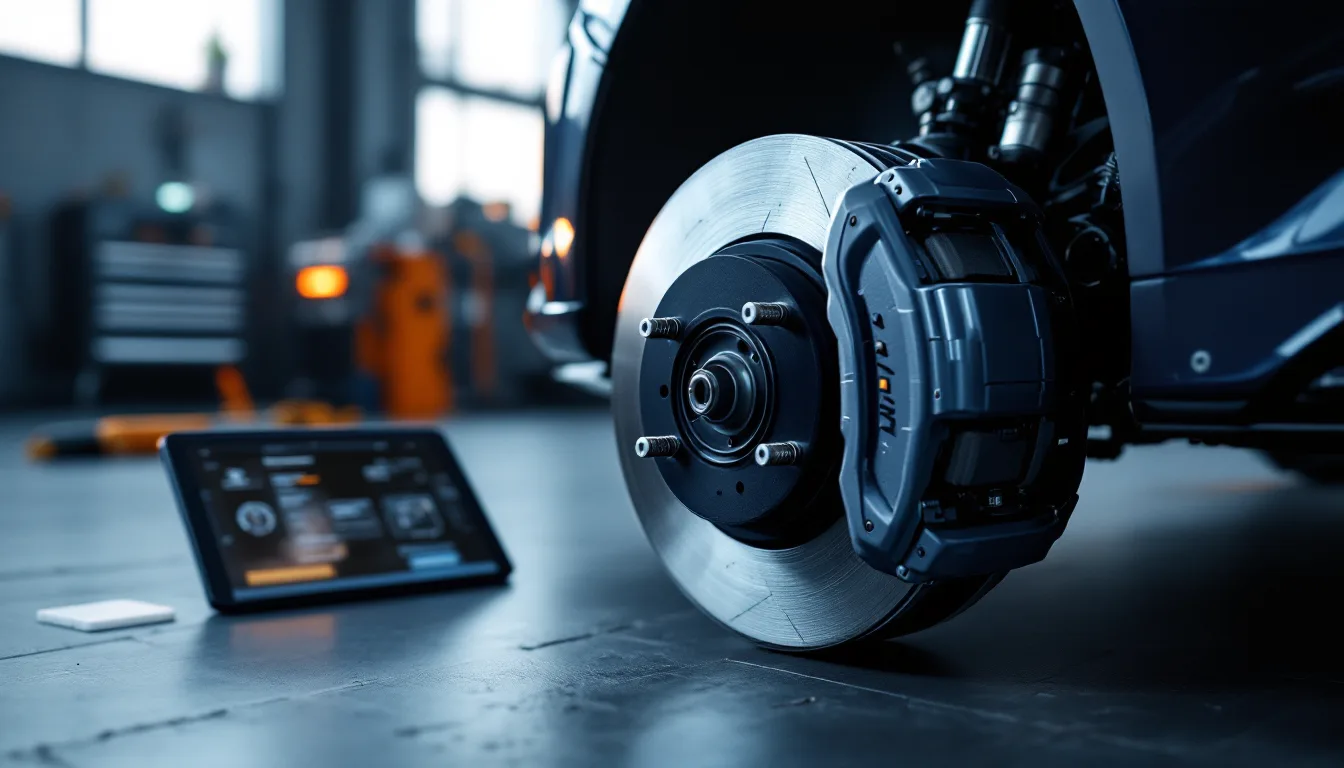
Pads and rotors fitted the way the factory specifies, with the electronic parking brake retracted through the diagnostic tool and the wear counter reset, so the brake message goes away and stays away.
Factory tools for eight brands, repairs covered by a 2-year/24,000-mile warranty
Symptoms
Problem
Brake pad wear message
Likely cause
The wear sensor has opened, or on BMW the calculated wear counter has expired
The fix
Pads, rotors if under minimum thickness, new sensor, counter reset
Problem
Pulsing pedal and a shudder at highway speed
Likely cause
Rotor thickness variation from heat, common after I-635 stop-and-go in summer
The fix
Rotors and pads together; the hub face is cleaned so the new rotor runs true
Problem
Parking brake fault after a brake job elsewhere
Likely cause
Rear caliper motors forced back without service mode, or the EPB never re-adapted
The fix
EPB service mode and re-adaptation through the tool, motor replaced if damaged
Problem
Soft pedal, fluid dark
Likely cause
Old fluid that has absorbed moisture, or a slow leak at a caliper or hose
The fix
Fluid exchange with pressure bleeding, leak repaired first if found
Problem
ABS and brake lights together
Likely cause
Wheel speed sensor, a tone ring, or the ABS module itself
The fix
Live wheel speed data in the tool identifies the corner, sensor or module replaced and coded
Most European cars built in the last fifteen years use an electric parking brake with a motor on each rear caliper. To fit rear pads the motor has to be retracted through the diagnostic tool in a service mode, and after the pads are in, the brake needs an adaptation run so it knows the new pad thickness. Push the pistons back by force and the motor gears or the spindle are damaged, which is how a pad job turns into a pair of calipers.
BMW adds a second reason. The wear message on an F- or G-chassis car comes from a calculated counter that uses the sensor only as a backstop; replace the pads and leave the counter and the message returns within weeks. Mercedes stores the wear sensor state in the brake controller, Audi and VW log it in the ABS module, and all of them need the reset written through ISTA, XENTRY or ODIS so the service interval starts fresh.
The tool also reads the ABS and stability control memory before and after. A brake message that arrives with a stability fault is a wheel speed sensor or a module, not pads, and finding that out before the wheels come off is the point of reading the car first.
Each axle gets pads and, where the rotors are at or under the minimum thickness stamped on the hat, new rotors, both from the original-equipment supplier or genuine and matched to the brake option on the VIN. A 3 Series with the M Sport brake and a 3 Series with the base brake take different parts, as do a Macan with the base caliper and a Macan GTS, and the VIN is the only reliable way to order.
New wear sensors, caliper hardware and anti-rattle clips go in with the pads; reusing a sensor that has been bent into an old pad is a false economy. Caliper slides are cleaned and lubricated, the hub face is cleaned so the new rotor sits true, and the pads are bedded on the road test according to the compound.
Brake fluid is exchanged when it is due, which on nearly every European brand is every two years regardless of mileage, using the DOT 4 grade the manufacturer specifies and a pressure bleeder, with the ABS pump cycled through the tool on cars that require it.
BMW and MINI wear rear pads faster than owners expect because the stability control uses the rear brakes to trim the car, and the calculated counter on newer models triggers the message before the sensor does. Mercedes rotors tend to go under thickness at the same time as the second set of pads, so the estimate usually includes both. Audi and VW with the MQB platform have a rear electric parking brake that will not release if the motor was forced, and the earlier B8 and C7 Audi cars have rear calipers whose motors fail on their own.
Porsche brakes are large, expensive and sensitive to pad compound; a street pad that squeals on a Cayenne is usually a hardware kit that was skipped. Jaguar and Land Rover use large rear calipers with an integrated electric parking brake on newer cars and a cable-operated drum-in-hat on older ones, which needs its own adjustment procedure. Ceramic composite brakes on any brand are inspected and measured, not replaced, unless the rotor is below its wear indicator.
Summer heat plus stop-and-go traffic is the hardest duty a brake sees. Rotors on a heavy SUV crawling along LBJ at 105 degrees cycle through temperatures that warp cheaper metal, and that is the origin of the pulsing pedal owners feel on the highway afterward. Original-equipment rotors with the right metallurgy and a clean hub face avoid most of it.
The other local factor is time. Cars that sit in a garage between short trips rust their rotors in Dallas humidity and the first stops of the day scrape it off, which is normal; a rotor that stays rough after a mile has a lip or a heat spot and is measured rather than guessed at.
The published range is $380–$1,600 per axle. Pads and rotors on a standard brake sit at $380–$900; large-caliper and performance options such as BMW M Sport, Mercedes AMG, Audi S and RS, Porsche and Range Rover rear brakes with the integrated parking brake push toward the top because the parts cost more and the parking brake work takes longer. Pads alone are quoted when the rotors measure above minimum.
The estimate is written per axle after the wheels come off and the rotors are measured, and nothing is replaced that still has life. The work is covered for 2 years parts and 2 years labor, up to 24,000 miles, nationwide. To book, call or text (817) 765-6604 with the year, model and the message or noise you hear.
Pads, rotors and sensors are genuine or from the original-equipment supplier that makes them for the brand, ordered by VIN because the brake option changes the part. Performance and ceramic options are quoted separately on their own part numbers.
The price moves with the brake option, whether the rotors are under minimum thickness, whether the rear parking brake motors need replacing, and whether brake fluid is due in the same visit. Labor includes the service mode, the adaptation and the counter reset.
Pricing
| Service | Price range | Typical time |
|---|---|---|
| Pads and rotors per axle, standard brake, with sensor and reset | $380–$900 | 1.5–2.5 hours |
| Pads and rotors per axle, performance or large-caliper option | $700–$1,600 | 2–3 hours |
| Brake fluid exchange with ABS bleed through the tool | $140–$220 | 1 hour |
| ABS or wheel speed sensor diagnosis | $165–$265 |
Typical Dallas independent-shop ranges per axle; the brake option on the VIN and the rotor measurement set the figure, written before any part is ordered.
The offer
Risk reversal
Covered for 2 years parts and 2 years labor, up to 24,000 miles, nationwide
No deposit, no card online: you approve the written range before any part is ordered
Published range
$380–$1,600
1.5–3 hours
Brands
BMW
3 Series E90, F30, G20, 5 Series E60, F10, G30, X3 and X5 E83, E70, F25, F15, G01, G05
Mercedes-Benz
C-Class W204, W205, W206, E-Class W212, W213, S-Class W221, W222
Audi
A4, A5 and Q5 B8, B9, 8R, FY, A6 and A7 C7, C8, A3 and S3 8V, 8Y
Porsche
911 996, 997, 991, 992, Boxster and Cayman 986, 987, 981, 718, Cayenne 955, 957, 958, 9YA
Land Rover
Range Rover L322, L405, L460, Range Rover Sport L320, L494, L461, Discovery LR3, LR4 L319 and Discovery 5 L462
MINI
R50, R52, R53, R56, R55, R57, R58, R59, R60 Countryman and R61 Paceman
Questions
The rear caliper motors were almost certainly pushed back without the service mode, or the parking brake was never re-adapted afterward. The fix is usually the adaptation through the tool; when a motor was damaged, that caliper is replaced. Either way the fault memory tells us which it is before we quote.
Only when they measure at or under the minimum thickness stamped on the rotor, or when they have heat spots or a deep lip. European rotors are thin by design and usually last two pad sets; we measure every rotor and the estimate says which ones have life left.
Yes, through ISTA, for the front and rear separately, which is what the condition-based service system needs. The counter is also why a BMW can show a wear message with pads that still have material; the calculation ran out, not the pad.
Every two years on nearly every European brand, regardless of mileage, because DOT 4 fluid absorbs moisture and its boiling point drops. The exchange uses the grade the brand lists, DOT 4 or the low-viscosity DOT 4 that newer ABS units need, and the service interval is reset with it.
We fit the compound the manufacturer specifies for the brake option, and performance pads on request for cars that are driven hard, with an honest note about noise and dust. Ceramic composite brakes are measured and serviced; they are not replaced as a routine item.
One axle with pads and rotors takes one and a half to two and a half hours including the parking brake work and the road test; both axles are usually done the same day. Brake fluid adds about an hour. Performance options with large calipers take longer and the estimate says so.
Related
Air and steel suspension, tool-calibrated
Batteries registered, drains traced, wiring fixed
Factory tool on every module, written findings
Book Brake Repair in Dallas
Brake pads, rotors, wear sensors and fluid for European cars in Dallas, with the electronic parking brake put in service mode, the wear counter reset and the brake controller read through the factory tool.